



Sydney is one of the world’s most globally connected cities, serving as a financial, cultural, and transportation hub for Australia and the wider Asia-Pacific region. Understanding the time in Sydney is essential for international business, travel planning, academic coordination, and global communication. Because Australia spans multiple time zones and observes daylight saving time in some regions but not others, Sydney’s time can be confusing for those unfamiliar with its system. This guide provides a comprehensive, authoritative explanation of Sydney’s time zone, its daylight saving practices, and how it compares to major cities around the world.
TLDR: Sydney operates on Australian Eastern Standard Time (AEST), which is UTC+10, and switches to Australian Eastern Daylight Time (AEDT), UTC+11, during daylight saving. Daylight saving typically runs from early October to early April. This shift significantly affects time differences between Sydney and global cities such as London, New York, and Tokyo. Understanding these seasonal adjustments is essential for scheduling international meetings and travel.
Sydney’s Standard Time Zone
Sydney is located in the state of New South Wales (NSW) and operates under Australian Eastern Standard Time (AEST) during the non-daylight saving period. AEST is:
- UTC+10 hours
- 10 hours ahead of Coordinated Universal Time (UTC)
This time zone is shared by:
- New South Wales
- Victoria
- Queensland (although Queensland does not observe daylight saving)
- Tasmania (with daylight saving)
- The Australian Capital Territory (ACT)

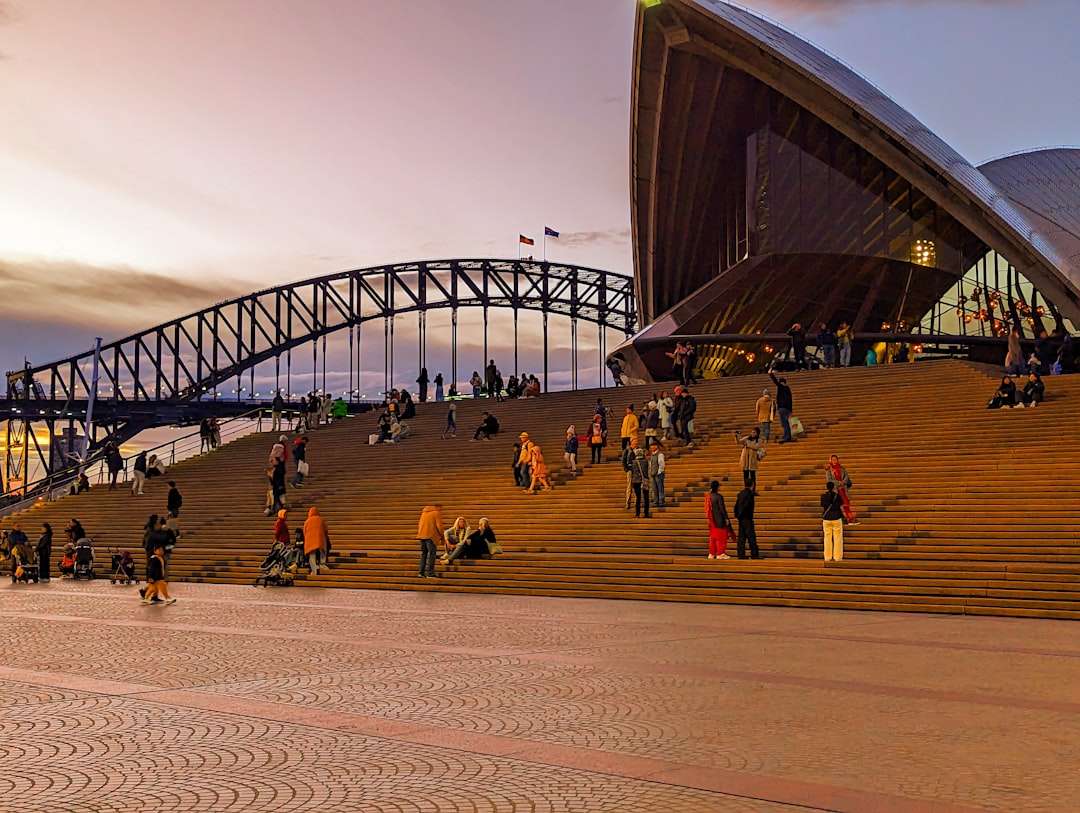
Australia spans three primary time zones:
- Australian Western Standard Time (AWST) – UTC+8
- Australian Central Standard Time (ACST) – UTC+9:30
- Australian Eastern Standard Time (AEST) – UTC+10
The half-hour offset in Central Standard Time often surprises international observers, but Sydney maintains a straightforward whole-hour offset throughout the year.
Daylight Saving Time in Sydney
One of the most important factors affecting the time in Sydney is Daylight Saving Time (DST). During DST, clocks are moved forward by one hour, shifting from AEST (UTC+10) to:
- Australian Eastern Daylight Time (AEDT) – UTC+11
When Does Daylight Saving Start and End?
In New South Wales, daylight saving:
- Begins: First Sunday in October (clocks move forward 1 hour at 2:00 AM to 3:00 AM)
- Ends: First Sunday in April (clocks move back 1 hour at 3:00 AM to 2:00 AM)
This means Sydney operates on AEDT for roughly six months of the year, primarily during the Australian spring and summer.
The primary purpose of daylight saving is to:
- Extend evening daylight hours
- Reduce evening electricity consumption
- Encourage outdoor activities and commerce
However, not all Australian states observe DST. Queensland, for example, remains on AEST year-round. This creates a seasonal one-hour difference between Sydney and Brisbane during the summer months.
Time Differences Within Australia
Because not all states observe daylight saving, internal time differences can shift during the year.
During Standard Time (Winter)
- Sydney and Brisbane: Same time
- Sydney is 30 minutes ahead of Adelaide (ACST)
- Sydney is 2 hours ahead of Perth (AWST)
During Daylight Saving Time (Summer)
- Sydney is 1 hour ahead of Brisbane
- Sydney is 30 minutes ahead of Adelaide (Adelaide also observes DST, shifting to ACDT UTC+10:30)
- Sydney is 3 hours ahead of Perth
This dynamic can complicate domestic travel and national business coordination, particularly for organizations operating across multiple states.
Sydney Compared to Major Global Cities
Because Sydney alternates between UTC+10 and UTC+11, its time difference with global cities changes depending on whether both locations are observing daylight saving.
Image not found in postmetaSydney and London
- London (GMT/UTC+0 in winter, BST/UTC+1 in summer)
Time Difference:
- 10 to 11 hours ahead when London is on GMT
- 9 to 10 hours ahead when London is on BST
The overlap for business communication is typically limited to a few hours in the late afternoon in Sydney and early morning in London.
Sydney and New York
- New York (UTC−5 in winter, UTC−4 in summer)
Time Difference:
- 15 to 16 hours ahead of New York
Because seasons are reversed between hemispheres, daylight saving transitions occur at opposite times of the year. This creates periods where the time difference temporarily shifts by one additional hour.
Sydney and Tokyo
- Tokyo (UTC+9, no daylight saving)
Time Difference:
- 1 hour ahead of Tokyo during AEST
- 2 hours ahead of Tokyo during AEDT
This relatively small difference facilitates business coordination between Australia and Japan.
Sydney and Los Angeles
- Los Angeles (UTC−8 in winter, UTC−7 in summer)
Time Difference:
- 17 to 19 hours ahead, depending on daylight saving adjustments
The International Date Line plays a significant role in these calculations, as Sydney is nearly a full calendar day ahead of many U.S. cities.
The International Date Line and Calendar Differences
Because Australia lies west of the International Date Line but far east relative to Europe and the Americas, Sydney is often:
- Already in “tomorrow” compared to the United States
- Near the end of the global business day cycle
For example:
- When it is 9:00 AM Monday in Sydney, it may be Sunday afternoon in parts of North America.
This forward position makes Sydney one of the first major financial centers to begin the global trading day.
Image not found in postmetaImpact on Business and Financial Markets
Sydney’s time zone plays a strategic role in global finance. The Australian Securities Exchange (ASX) opens while North American markets are closed and before European markets begin full trading activity.
Key implications include:
- Early market activity: Sydney often reacts first to geopolitical or economic news released overnight in the U.S.
- Asia-Pacific alignment: Time proximity to Tokyo, Singapore, and Hong Kong supports regional trading.
- Limited U.S. overlap: Real-time collaboration with North America requires careful scheduling.
Multinational companies frequently establish staggered work schedules to compensate for limited shared working hours.
Travel Considerations and Jet Lag
Travel to and from Sydney often involves long-haul flights and significant time shifts. Visitors frequently experience jet lag due to:
- Large time differences (up to 19 hours)
- Crossing multiple time zones
- Reversed seasons
Practical advice for travelers:
- Begin adjusting sleep schedules 2–3 days prior to departure.
- Hydrate consistently during flights.
- Seek natural sunlight upon arrival to reset circadian rhythms.
Because Sydney is in the Southern Hemisphere, travelers should also note that summer occurs from December to February, the opposite of Europe and North America.
Technology and Automatic Time Updates
Modern digital infrastructure has reduced confusion surrounding Sydney’s time changes. Most devices automatically update for daylight saving provided:
- Location services are enabled, or
- The Sydney time zone is manually selected (Australia/Sydney in most systems).
However, scheduling across regions still requires careful verification, especially during the weeks when:
- Australia changes clocks but Europe or North America has not yet done so.
- Different countries begin or end daylight saving on different dates.
Common Misunderstandings About Sydney Time
Several misconceptions frequently arise:
- All of Australia shares one time zone. In reality, there are three primary zones and multiple daylight saving policies.
- Daylight saving is nationwide. Queensland and Western Australia do not observe DST.
- The time difference is constant year-round. Seasonal clock changes alter international differences.
These misunderstandings can lead to missed meetings and scheduling errors, particularly for international organizations.
Conclusion
The time in Sydney is defined by its position in the Australian Eastern Time Zone, operating on UTC+10 during standard time and UTC+11 during daylight saving. While this may seem straightforward, seasonal clock adjustments and varying daylight saving policies across Australia introduce complexity. Globally, Sydney’s far-eastern longitude places it significantly ahead of Europe and the Americas, often in the next calendar day.
For businesses, travelers, and international collaborators, precise awareness of these time differences is essential. By understanding Sydney’s standard time, daylight saving schedule, and its shifting offsets with global cities, individuals and organizations can plan effectively, avoid confusion, and operate confidently across borders.